
Building a custom CRM dashboard has no universal fixed cost in 2026: the quote depends on whether you configure existing reports, connect separate data sources or commission custom development. Budget for data preparation, access controls, testing and ongoing maintenance as well as the dashboard itself.
- How much does it cost to build a custom dashboard in CRM software? Scope determines the quote.
- Configure existing CRM reporting before commissioning custom development; confirm that it supports your required calculations and permissions.
- Mesh App combines CRM/ERP modules for small and medium-sized businesses; assess dashboard requirements separately.
- Compare implementation, data preparation and ongoing maintenance, not just the initial dashboard build.
Why this matters
A dashboard brief that asks only for charts leaves the underlying work undefined. You need to specify what each figure means, where its data comes from and who can see it before comparing proposals.
Keep the dashboard budget separate from the broader CRM software cost. A subscription, a reporting feature and a dashboard implementation are different purchasing decisions; ask which parts each proposal includes.
For a 2026 purchasing decision, compare quotes against the same reporting requirements, not screenshots. An attractive chart does not establish whether its totals match your records or whether your team can maintain it.
How much does it cost to build a custom dashboard in CRM software?
The cost is the combined scope of reporting configuration, data work, development, validation and support. Start by identifying the implementation approach, then ask providers to separate those work packages in their proposals.
| Approach | Best for | Main work to quote | Advantage | Limitation |
|---|---|---|---|---|
| Configure existing CRM reporting | Reporting needs that existing features already support | Fields, filters, calculations, layouts and access settings | Keeps the reporting work inside the CRM | Depends on the platform's reporting capabilities |
| Connect a separate reporting tool | Reporting across separate business systems | Data connections, mapping, calculations and access management | Creates a reporting layer across sources | Adds another system to administer |
| Commission custom development | Requirements that configuration or reporting tools cannot meet | Data retrieval, calculations, interface development, deployment and maintenance | Lets you specify behaviour beyond existing reporting controls | Requires ownership of the code and its upkeep |
These are implementation approaches, not guaranteed service tiers. A proposal can combine them, so request a description of the architecture rather than accepting a label such as “advanced dashboard.”
Choose the approach that meets the reporting requirement with the fewest separately maintained components. Custom development needs a specific justification: a calculation, workflow or access requirement that the other approaches cannot satisfy.
What belongs in the cost breakdown?
Ask for separate descriptions of these deliverables. Keep recurring obligations distinct from the initial implementation.
- Reporting specification: metric definitions, intended users, reporting periods and required decisions.
- Data preparation: field mapping, duplicate handling, missing-value rules and historical records.
- Dashboard implementation: configuration or development of calculations, filters, charts and detail views.
- Validation and handover: reconciliation against source records, permissions testing, documentation and training.
- Ongoing operation: connection monitoring, access administration, fixes and changes after handover.
A proposal that bundles everything into “dashboard setup” is difficult to compare. Ask what you receive, what you must supply and what counts as additional work.
Configure existing CRM reporting
Best for: teams whose reporting needs fit the CRM's existing capabilities. Start here when your required records already sit in the CRM and the reporting controls support the calculations you need.
Configuration means working within existing features rather than commissioning a separate application. Your brief still needs field definitions, filters, user access and a method for checking the finished results.
The benefit is a reporting workflow within the system your team uses. The constraint is that configuration cannot supply capabilities the platform does not support; confirm the required calculations and visibility rules before committing.
Ask the provider to demonstrate a representative report using your field definitions. A generic sales chart does not prove that the system can distinguish invoiced work, recorded time and project costs in the way your business requires.
Connect a separate reporting tool
Best for: teams that need a reporting view across separate systems. This approach deserves consideration when the required information does not reside in the CRM alone.
The scope extends beyond choosing charts. You must define how records match across systems, how updates reach the reporting tool and what happens when a connection fails.
Its advantage is a reporting layer that draws from different sources. Its drawback is another set of access controls, connections and administration tasks. Ask who owns each connection and how the team detects stale or incomplete data.
Do not assume matching field names mean matching definitions. A project marked complete in an operational system and an invoice marked paid in a finance system describe different events; the dashboard must preserve that distinction.
Commission custom dashboard development
Best for: teams with documented requirements that existing reporting options cannot meet. Specify the unsupported requirement before asking for development proposals.
Custom development gives you control over the commissioned behaviour, subject to the agreed scope. It also creates responsibility for source code, deployment, dependencies and future changes.
Require the proposal to state who owns the code, who can maintain it and how you obtain the documentation. Acceptance should depend on correct results and access controls, not just a completed interface.
Separate essential behaviour from presentation preferences. A required calculation can justify development; a preferred chart arrangement should first be checked against existing configuration options.
Why custom CRM dashboard costs vary
The scope changes when the dashboard must do more than display existing records. These factors belong in the brief because they determine what the provider must implement and verify.
- Data sources: records inside the CRM require a different implementation from records retrieved across separate systems.
- Metric definitions: a stored field is different from a calculated measure that combines time, invoices and project records.
- Data quality: duplicates, inconsistent statuses and incomplete fields require rules before totals become meaningful.
- Access rules: shared company totals differ from views restricted by team, project or responsibility.
- Update requirements: scheduled reporting and current operational reporting impose different retrieval and failure-handling requirements.
- Ongoing ownership: configuration changes, connection maintenance and custom-code support need an assigned owner.
For your 2026 brief, describe each requirement as an observable result. Replace “live financial overview” with a definition of the source records, update behaviour and information each role is allowed to see.
Fix ambiguous definitions before adding more charts. Otherwise, the dashboard implementation merely makes an unresolved reporting disagreement more visible.
How to request a comparable dashboard quote
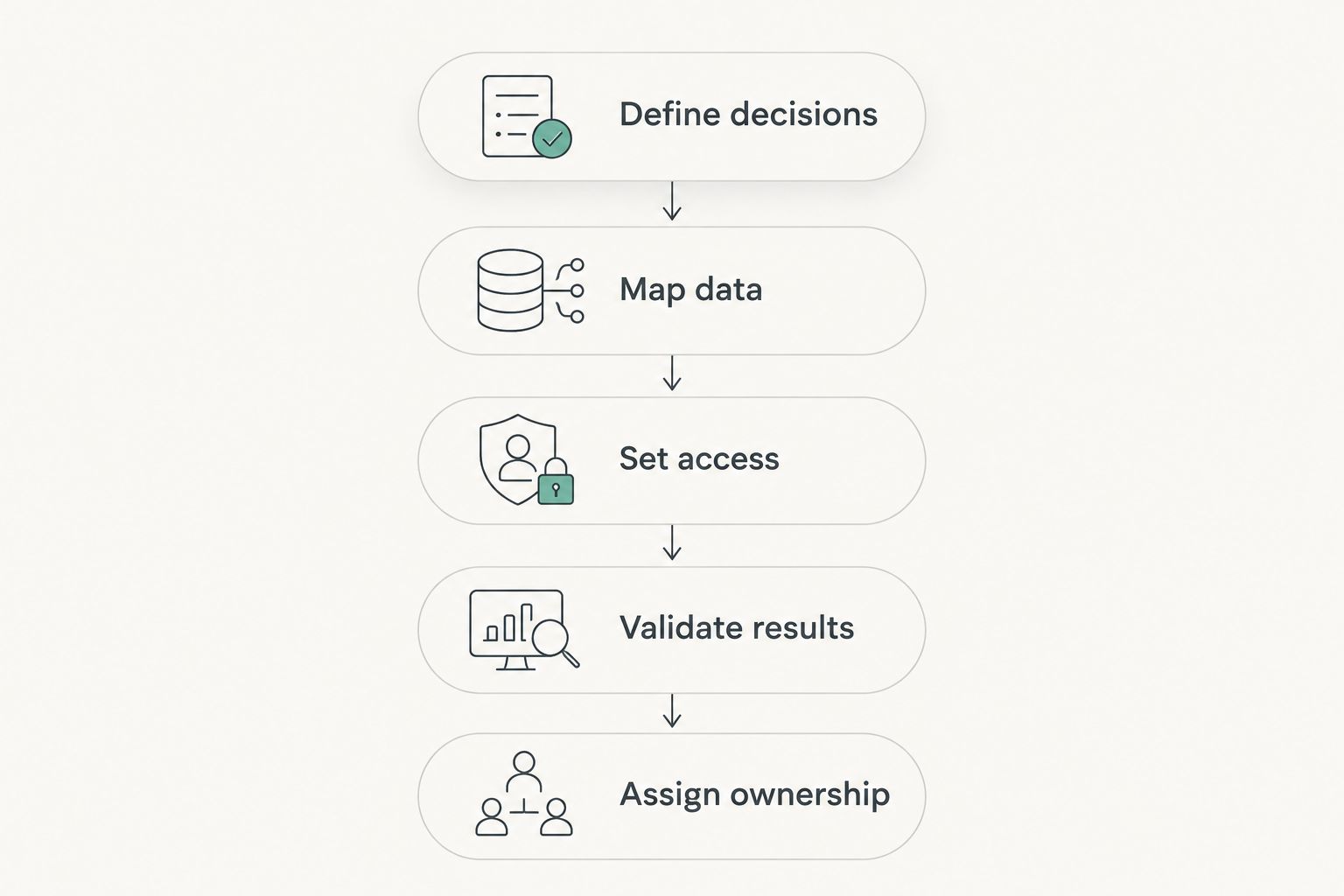
Give every provider the same brief. The sequence below turns a broad request into deliverables you can evaluate without assuming a particular platform supports them.
- Define decisions. State what the user should decide after opening the dashboard. Examples include identifying overdue follow-up work or checking a project's recorded time against its budget.
- Map data. Name the source fields, record owners and relationships. Explain how contacts, projects, time entries and invoices relate where those records are relevant.
- Set access. Describe what each role can view, filter, export or change. Include restrictions on commercially sensitive and personal information.
- Validate results. Specify how you will reconcile dashboard totals against source records and check edge cases.
- Assign ownership. Identify who maintains definitions, permissions, connections and documentation after handover.
Write these requirements before choosing the visual layout. A shared brief makes differences between proposals visible: one provider might include data preparation while another expects you to complete it.
Specify what successful delivery means
Your acceptance criteria should describe behaviour you can check. Ask for a walkthrough that follows a source record through the calculation to the displayed result.
Include a record with missing information, a change to a record's status and a user with restricted access. These checks expose assumptions that a polished demonstration can leave unanswered.
For a 2026 handover, request documentation of the implemented definitions and dependencies. A dashboard is not fully handed over if nobody on your side knows how its figures are calculated or who handles a broken connection.
Where Mesh App fits
Mesh App is a modular CRM/ERP SaaS platform with contact management, project management, time tracking, invoicing and finance modules. Mesh App is suited to small and medium-sized businesses evaluating modular CRM/ERP for those business functions.
That scope is relevant when your dashboard brief spans customer records, projects, recorded time and invoicing. Assess the reporting requirement against the modules you intend to use, rather than assuming that a modular platform includes every requested dashboard capability.
The advantage is the stated breadth of business functions available for evaluation. The purchasing constraint is separate: Mesh App's module list is not confirmation of a particular custom dashboard, calculation, integration or implementation service. Ask for a demonstration against your brief before treating any requirement as covered.
Is a custom dashboard included in a CRM subscription?
A CRM subscription does not, by itself, establish that custom dashboard implementation is included. Check the agreement for reporting access, configuration services, development, training and support.
Ask the provider to distinguish a feature you can use from work someone must perform. Access to a dashboard builder and delivery of your finished dashboard are different commitments.
Can I reduce the scope without losing useful reporting?
You can reduce scope by starting with an existing report that answers the decision you need to make. Add development only for a documented gap.
Use a reporting period and clearly defined user roles in the initial brief, then verify the results before extending it. Preserve calculation accuracy and access controls before expanding presentation options.
What should a dashboard maintenance agreement cover?
A dashboard maintenance agreement should assign responsibility for failed data updates, permission changes, calculation defects and changes to connected systems. Separate correction of an agreed deliverable from requests for new behaviour.
In 2026, review the maintenance terms alongside the implementation proposal, not after acceptance. Require a clear process for reporting a fault and identifying who owns its resolution.
FAQ
How much does it cost to build a custom dashboard in CRM software?
A custom CRM dashboard has no universal fixed cost; the quote depends on configuration, data preparation, integrations, development and maintenance. Request an itemised proposal against a written reporting brief.
Is configuring a CRM dashboard better than custom development?
Configuration is the better starting point when existing CRM reporting meets your calculations, access rules and presentation requirements. Custom development needs a documented requirement that configuration cannot satisfy.
Do I need a separate reporting tool for my CRM dashboard?
A separate reporting tool is an option when you need reporting across different systems or beyond the CRM's existing controls. Assess the extra connection, access and maintenance responsibilities before choosing it.
Can Mesh App support my dashboard requirements?
Assess Mesh App against your written dashboard requirements before buying. Its stated scope includes contact management, project management, time tracking, invoicing and finance modules, but that scope does not confirm a specific dashboard implementation.
What should I send a provider before asking for a dashboard quote?
Send the decisions the dashboard must support, metric definitions, source fields, access rules and acceptance checks. Ask the provider to identify exclusions and ongoing responsibilities in the proposal.
Who should maintain a custom CRM dashboard?
Assign maintenance to an identified internal owner, implementation partner or development provider through an explicit agreement. Define responsibility for calculations, access, connections, documentation and fault handling.
One last thing
Ask to trace a displayed total back to its source records before approving the dashboard. A chart that looks correct is not evidence that its calculation is correct.
Make that trace part of acceptance. If a provider cannot explain which records contribute to a figure, resolve the calculation before requesting another visualisation.